
Episode 580: Carter & Payton Bradsky: LymeLess, AI, Patient Data, and the Future of Lyme Disease Care
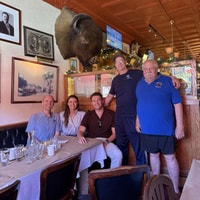
What if the experiences of thousands—or eventually millions—of Lyme disease patients could help the next patient find answers faster?
In this episode of the Tick Boot Camp Podcast, we sit down with siblings Carter Bradsky and Payton Bradsky, co-founders of LymeLess Health, to explore their family's extraordinary Lyme disease journey and the technology they're building to help other patients navigate complex chronic illness.
Lyme disease didn't affect just one member of the Bradsky family. Their mother became severely ill and largely bedridden while searching for answers through the conventional medical system. Carter later developed debilitating neurological and psychiatric symptoms while preparing to play college basketball. Payton experienced seizure-like episodes, was diagnosed with epilepsy, lost her driver's license, and struggled with cognitive dysfunction while beginning a promising career in technology.
Their experiences ultimately inspired a much bigger question:
What if Lyme patients didn't have to start from zero?
That question became LymeLess, a precision care navigation platform built around an AI companion named Ella. The goal is to help patients organize complex medical histories, track symptoms and treatments, recognize patterns, prepare for medical appointments, find Lyme-literate providers, and make better use of the enormous amount of information generated throughout a chronic illness journey.
A Family's Lyme Disease Journey
Carter and Payton explain that their family's Lyme journey began with their mother around 2015.
After relocating from South Dakota to Arizona, their mother progressively became sicker. Despite extensive medical evaluations—including care through major medical institutions—the family struggled to find an explanation for what was happening.
At one point, her symptoms were attributed to psychological causes.
Everything changed through a chance encounter.
While attending an event surrounding Carter's high school graduation, their mother discussed her symptoms with someone familiar with Lyme disease. That conversation led her toward a Lyme-literate provider and ultimately toward the answers the family had been searching for.
Her experience would later become critically important when both Carter and Payton developed their own unexplained illnesses.
Carter Bradsky's Lyme Disease Story
Carter was preparing for his senior year of high school and planning to play college basketball when his health began changing.
During a period that also included significant emotional and physical stress, Carter began experiencing symptoms including:
- Brain fog and cognitive dysfunction
- Memory loss
- Dissociation
- Depression
- Anxiety
- Changes in his ability to function academically and athletically
Because his mother had already traveled the Lyme disease diagnostic journey, she recognized similarities between Carter's symptoms and what she had experienced.
That awareness allowed Carter to reach a Lyme-literate provider relatively quickly.
He describes undergoing combination antibiotic therapy with herbal support and eventually reaching remission after approximately 1.5 to 2 years.
His experience became an important lesson that would later influence LymeLess:
Having someone Lyme-literate helping you navigate the journey can dramatically change how quickly you find the next right step.
Payton Bradsky: Seizures, Epilepsy Misdiagnosis, and Lyme Disease
Payton's illness presented very differently.
During her senior year of college, after an intense period of stress, illness, dehydration, travel, and lack of sleep, Payton experienced what appeared to be a seizure.
She was subsequently diagnosed with epilepsy.
The diagnosis changed her life.
Payton was placed on powerful anti-seizure medication, lost her driver's license, struggled cognitively, and found herself unable to use the brain she had relied upon throughout her life as an engineering student.
This was particularly frightening because she had already accepted a job at Google and was preparing to begin her career in technology.
Her family once again questioned whether there might be another explanation.
That eventually led Payton toward Lyme and tick-borne disease testing and treatment.
Unlike Carter's relatively shorter journey, Payton's recovery became a much longer process involving years of treatment and numerous providers.
Her experience illustrates one of the central themes of this episode:
There is no single Lyme disease presentation—and there is no single recovery pathway that works for every patient.
From Lyme Patients to Technology Founders
The siblings eventually brought very different professional backgrounds together to create LymeLess.
Carter studied finance and data analytics at the University of San Diego before working in technology, media, and telecommunications investment banking in New York City.
Payton studied computer engineering and entrepreneurship at Santa Clara University in Silicon Valley before spending approximately five years at Google, working as a software engineer and product manager.
Her experience in technology—including exposure to privacy, security, and regulated data environments—would later become particularly relevant when designing a health platform handling sensitive patient information.
Both siblings eventually left their careers to tackle a problem they understood personally:
Why does navigating Lyme disease so often become a second full-time job for the patient or caregiver?
What Is LymeLess?
LymeLess describes itself as a precision care navigation platform designed around the patient.
Instead of leaving medical information scattered across patient portals, paper binders, lab reports, physician notes, symptom journals, and a patient's memory, LymeLess is working toward creating a centralized longitudinal record of the patient's journey.
The platform's AI companion is called Ella.
Patients can use Ella to help:
- Organize their health history
- Track symptoms over time
- Track treatments and supplements
- Record reactions and potential triggers
- Upload medical documents and laboratory results
- Identify patterns in symptoms and treatments
- Prepare for doctor appointments
- Surface relevant resources and research
- Find Lyme-literate providers
- Remember previous treatment responses
- Better understand their evolving health journey
Carter describes one user's characterization of Ella as a "second brain" for when Lyme brain makes remembering and organizing everything difficult.
Turning the Lyme Disease Binder Into Usable Data
Anyone who has navigated chronic Lyme disease knows about the binder.
Years of:
- Bloodwork
- Imaging
- Specialist reports
- Medication lists
- Treatment protocols
- Symptom histories
- Diagnostic testing
- Hospital records
Patients frequently carry enormous amounts of information between specialists, yet a physician working within a short appointment may have only minutes to understand it.
The conversation explores whether AI could become a bridge between these two realities.
Instead of expecting a physician to read hundreds or thousands of pages, AI may eventually help synthesize a patient's history into the information most relevant to that particular appointment.
LymeLess currently allows patients to upload digital documents and images of physical records, while the company is working toward easier bulk uploading and potential integrations with electronic health record systems.
The LymeLess "Warrior Report"
One important feature discussed in the episode is the Warrior Report.
Patients can export information from LymeLess into a report designed to help communicate their health journey to their provider.
Carter and Payton envision this concept becoming considerably more sophisticated in the future.
One possibility discussed is a provider-facing experience in which clinicians could interact with a patient's organized information, review relevant research, and ask questions in language and formats designed specifically for medical professionals.
Longer term, LymeLess is exploring clinical decision-support concepts and potential integrations with electronic health record platforms.
Ella Is Not a Doctor
Carter and Payton emphasize an important distinction throughout the interview:
Ella is not intended to replace physicians.
LymeLess is not positioning Ella as an autonomous doctor that diagnoses disease or prescribes treatment.
Instead, the goal is to help patients:
- Understand their own information
- Recognize patterns
- Surface questions
- Find relevant resources
- Organize their medical histories
- Communicate more effectively with their healthcare team
The ultimate medical decisions remain between patients and qualified healthcare professionals.
Can AI Help Patients Recognize Patterns?
One of the most exciting possibilities discussed is AI's ability to analyze enormous amounts of information.
Lyme and tick-borne disease patients frequently experience changing combinations of:
- Neurological symptoms
- Psychiatric symptoms
- Pain
- Fatigue
- Inflammation
- Treatment reactions
- Food sensitivities
- Environmental triggers
- Co-infections
- Medication and supplement responses
Patients may recognize individual events but struggle to see patterns unfolding across weeks, months, or years.
Payton explains that Ella is being designed to combine patient-specific longitudinal information with curated research and educational resources.
The goal is not simply to answer a question at one moment in time, but to understand that question in the context of the patient's broader journey.
Learning From Other Lyme Patients
The conversation then expands beyond individual patient tracking.
Could anonymized patient experiences eventually help identify broader patterns across the Lyme community?
Carter describes a long-term vision for a community intelligence layer that could potentially help patients, providers, and researchers learn from real-world experiences at scale.
Instead of every newly diagnosed patient beginning at zero, future patients could potentially benefit from patterns identified among people with similar symptoms, diagnoses, treatment histories, and responses.
The siblings discuss the potential for properly anonymized and de-identified information to eventually contribute to research while protecting individual patient identities.
Lyme Disease Research and Real-World Evidence
The episode explores an even larger possibility:
Could longitudinal patient data help accelerate Lyme disease research?
Traditional clinical trials are essential, but they can be expensive, geographically limited, and slow.
Meanwhile, Lyme patients are already trying enormous numbers of treatments in the real world.
The challenge is that much of that information disappears.
One patient tries a treatment. Another patient tries something different. A physician discovers something useful in clinical practice. Patients discuss experiences in Facebook groups and online forums.
But those experiences rarely become structured research-quality data.
LymeLess hopes eventually to help close that gap.
Potential future applications discussed include:
- Identifying promising treatment patterns
- Generating real-world evidence
- Identifying potential clinical trial candidates
- Helping researchers determine which therapies deserve formal study
- Supporting decentralized research
- Connecting patients with clinical trials
- Helping researchers study complex combinations of Lyme disease, co-infections, and overlapping conditions
Lyme Disease Is More Than Borrelia
Another important research discussion centers around the complexity of the Lyme patient population.
Many patients aren't navigating Borrelia alone.
Their health picture may also include:
- Bartonella
- Babesia
- Other tick-borne infections
- Mold exposure
- Mast cell activation
- Dysautonomia
- Inflammation
- Neurological dysfunction
- Genetic differences
- Environmental exposures
By collecting longitudinal information across complex patients, platforms such as LymeLess could potentially help researchers study the combinations and patterns that traditional Lyme research may not fully capture.
Protecting Patient Privacy
Health information is extraordinarily sensitive, and the episode includes an extensive discussion about privacy and security.
Payton explains that protecting patient data has been considered from the beginning of LymeLess' development.
According to Payton, LymeLess uses:
- Encryption at rest
- Encryption in transit
- Zero-data-retention policies and agreements with vendors powering the platform
- Patient control over their information
- De-identification and anonymization approaches for broader data use
She emphasizes that patients should be able to benefit from AI technology while still understanding and controlling how their information is used.
LymeLess and the Doctor-Patient Relationship
One of the most interesting themes of the conversation is that technology could potentially improve—not replace—the relationship between doctors and patients.
Patients with complex chronic illness frequently arrive at appointments carrying years of medical information.
Doctors, meanwhile, may have extremely limited appointment time and may not have extensive training in Lyme and tick-borne diseases.
That can create frustration on both sides.
Could better-organized information help?
The conversation explores how AI-generated summaries, longitudinal symptom tracking, research resources, and eventually provider-facing tools could help physicians understand complicated patients more quickly.
Rather than telling patients they must become their "own doctor," the goal is to help patients become better-informed partners with their healthcare team.
Can LymeLess Help Health Coaches?
The siblings also discuss the growing role of health coaches in complex chronic illness.
Because Lyme patients often need significant support between medical appointments, health coaches can help patients organize treatment plans, make lifestyle changes, and navigate day-to-day challenges.
LymeLess could potentially serve two populations:
Patients who cannot afford ongoing human health coaching may gain access to a more affordable form of between-appointment support.
At the same time, professional health coaches may eventually use technology like LymeLess to organize information and support more patients efficiently.
Carter's Mold Illness After Lyme Remission
The episode also takes an unexpected turn when Carter shares a recent health setback.
After reaching remission from Lyme and tick-borne disease, Carter moved into an older apartment in New York City's SoHo neighborhood.
Over time, he began experiencing:
- Brain fog
- Severe fatigue
- Cognitive problems
- Word-recall difficulties
- Nervous system dysregulation
- Increasing sensitivity to caffeine
- Anxiety
- Eye floaters
Initially, he questioned whether Bartonella or another tick-borne infection had returned.
Testing eventually pointed toward mold exposure.
Environmental testing of his apartment reportedly identified numerous types of water-associated mold, and subsequent testing contributed to his decision to address mold illness and leave the environment.
He describes temporarily moving home, focusing on recovery, reducing caffeine and screen exposure, exercising, using sauna, and continuing to work with his healthcare team.
Importantly, Carter says subsequent testing did not indicate reactivation of Lyme, Bartonella, or Babesia.
His experience reinforces another reason he believes longitudinal health records are valuable:
When symptoms return years later, knowing exactly what happened during previous illnesses and treatments can provide important context.
Discovery, Active Treatment, and Maintenance
Payton describes three broad stages LymeLess is designed to support:
Discovery
Someone has experienced a tick bite or unexplained symptoms and is trying to determine what should happen next.
Active Treatment
The patient has a diagnosis and is navigating treatments, symptoms, reactions, providers, testing, and progress.
Maintenance / Remission
The patient is doing better but still wants to understand their health, recognize potential triggers, remember previous treatment responses, and protect their progress.
This makes LymeLess potentially relevant beyond the period when someone is acutely sick.
Genetics and Precision Medicine
The interview also explores another future direction: incorporating genetic information.
Genetics can influence:
- Detoxification
- Methylation
- Medication responses
- Nutritional needs
- Inflammatory pathways
- Other aspects of individualized health
Carter and Payton discuss a future in which genetics, laboratory testing, patient history, symptoms, environmental factors, and treatment responses could contribute to increasingly personalized health navigation.
Their larger vision moves from precision care navigation toward precision care and, eventually, increasingly individualized precision medicine.
How Much Does LymeLess Cost?
At the time of this interview, Carter and Payton describe LymeLess as offering a one-month free trial, followed by a subscription of approximately $15 per month.
They also discuss working toward making portions of the platform available more broadly and maintaining a scholarship program for people who cannot afford the subscription.
Carter explains that a portion of subscription revenue is intended to help support that scholarship program.
Turning Lyme Disease Into Purpose
The episode ultimately becomes about much more than artificial intelligence.
Both Carter and Payton discuss how illness changed their lives.
They describe fear, isolation, cognitive impairment, uncertainty, faith, family support, and the challenge of trying to continue school and demanding careers while sick.
They also discuss something we talk about frequently at Tick Boot Camp: finding purpose through suffering.
Payton continued developing her engineering career while undergoing treatment.
Carter describes spending long periods alone in church during college, trying to quiet his mind and understand what mattered most.
Eventually, their experiences gave them a problem they felt compelled to solve.
Their mission with LymeLess is ambitious:
Learn from the unique story of every patient so future patients don't have to navigate Lyme disease through the same degree of trial, error, expense, and luck.
Key Topics Discussed
- Carter and Payton Bradsky's family Lyme disease story
- Their mother's long diagnostic journey
- Medical dismissal and unexplained chronic symptoms
- Carter's neurological Lyme symptoms
- Brain fog, memory loss, anxiety, depression, and dissociation
- Payton's seizure and epilepsy misdiagnosis
- Neurological and psychiatric Lyme disease symptoms
- Lyme disease remission and recovery
- Lyme disease and co-infections
- Bartonella and Babesia
- Mold toxicity after Lyme disease
- AI and Lyme disease
- LymeLess Health
- Ella AI companion
- Precision care navigation
- Symptom and treatment tracking
- Longitudinal patient health data
- Medical record organization
- The Lyme disease "binder"
- Patient-provider communication
- Warrior Reports
- Lyme-literate provider matching
- Clinical decision-support technology
- Electronic health record integration
- AI pattern recognition
- Patient privacy and healthcare data security
- De-identification and anonymization
- Real-world evidence
- Lyme disease clinical trials
- Patient-generated health data
- Artificial intelligence and medical research
- Health coaching and Lyme disease
- The financial burden of chronic Lyme disease
- Genetics and personalized medicine
- Precision medicine
- Faith and chronic illness
- Post-traumatic growth
- Finding purpose after Lyme disease
- Life after Lyme disease
Learn More
Listen to more Tick Boot Camp Podcast episodes
Explore Tick Boot Camp interviews with Lyme doctors
Recently bitten by a tick? Start with the Tick Boot Camp Tick Bite Blueprint
About Tick Boot Camp
Tick Boot Camp is a Lyme disease awareness and advocacy platform built around a simple belief: people navigating Lyme and tick-borne illness deserve validation, community, better information, and hope.
Through conversations with patients, doctors, researchers, advocates, and innovators, we share the experiences and emerging ideas helping move the Lyme community forward.
You are not alone—and healing is possible.